

Fine Art & Luxury
by Pandora Mather-Lees
Pandora Mather Lees is an Art Historian, FRSA and Liveryman of the Worshipful Company of Arts Scholars, She brings over 25 years of leadership across the international art and cultural sectors having been at the forefront of art publishing, licensing, digital platforms and collections management, building relationships with museums, galleries, collectors and auction houses worldwide. As Managing Director of Bridgeman Images and Bridgeman Education, she helped expand access to some of the world's most important art collections across publishing, education and digital media markets.
In Turner’s Wake: Jake Wood-Evans at Chatham Historic Dockyard.
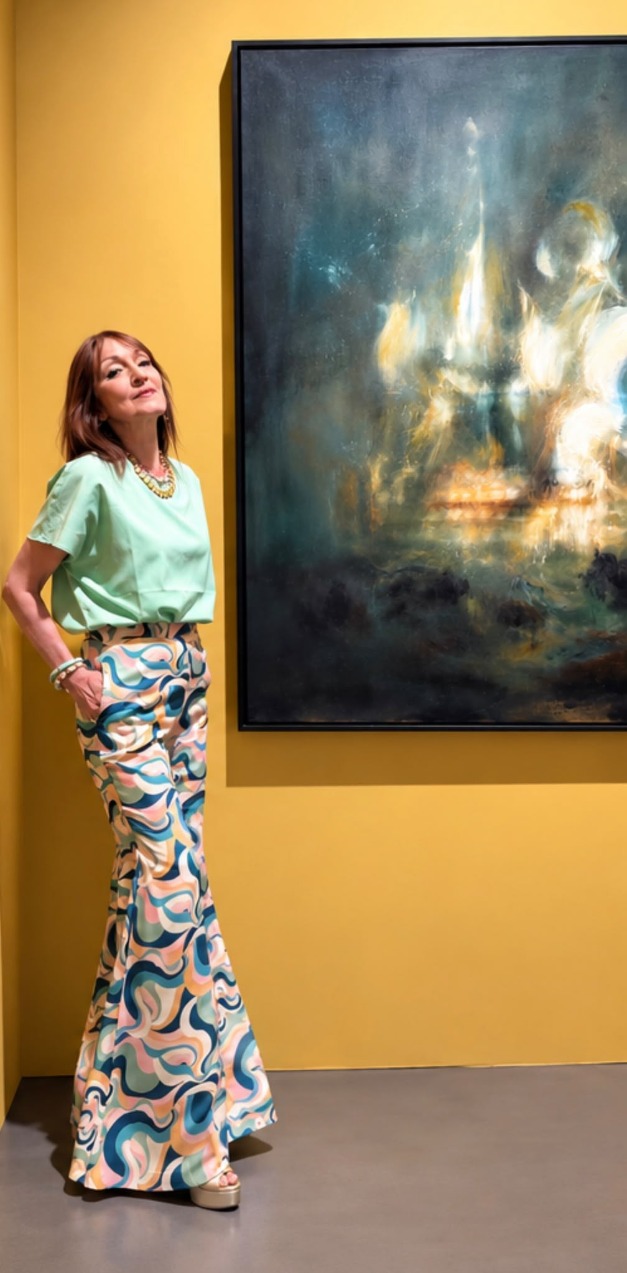
British artist Jake Wood-Evans has opened his largest institutional exhibition to date at Chatham Historic Dockyard. “In Turner’s Wake”, which opened this Thursday, brings his contemporary paintings into a fascinating dialogue with the work of J.M.W. Turner, one of Britain’s most important artists. Pandora Mather-Lees attended the opening at this place of maritime cultural history where the coastal atmosphere and eerie lighting set the scene for the juxtaposition of these two weighty artists’ works.
The exhibition includes substantial works by Turner loaned by the Tate, providing an important historical foundation for Wood-Evans’ paintings as a response. Seeing Turner’s paintings alongside the artist’s contemporary interpretations creates a compelling interplay of old and new. Moreover, it is not jarring, rather a seamless dialogue supported by the artful curation and enriched by painterly interpretations of mythological subjects from European masters such as Jordaens, Rubens, Poussin and Carle van Loo.
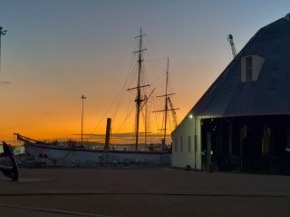
Jake Wood-Evans Exhibition, sunset at the dockayard.
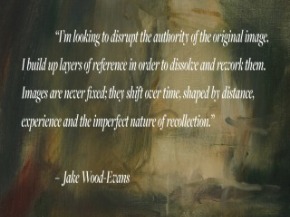
Quote from Jake Wood-Evans.
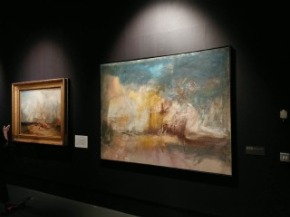
Jake Wood-Evans painting beside Turner.
Indeed, Wood-Evans’ practice follows the long tradition of artists studying and copying the Old Masters. However, rather than simply reproducing historical works, he takes familiar imagery apart and reconstructs it through his own visual language. His paintings move between figuration and abstraction, allowing fragments of the original image to emerge before being obscured or transformed.
Such protean process is most evident in his handling of paint. Working instinctively with brushes, knives, scrapers and even gloved hands, Wood-Evans rapidly builds, removes and reworks the surface. The resulting paintings have a sense of movement and instability, almost as though the image is being remembered rather than observed.
Turner is an obvious and important reference because of his ability to create the same atmospheric magical canvases. In Turner’s case, he did so in an age where classical history painting was highly regarded and superior to mere seascapes, yet Turner’s are truly majestic.
What makes the exhibition particularly engaging is that it reveals both artists’ understanding of paint as more than a means of representation. The medium itself becomes the subject, creating atmosphere, emotion and ambiguity. A case at the show’s entrance displays a jumble of Wood-Evans’ artists materials, studio artefacts and paints as a tribute to this materiality. An installation in its own right. It could almost have been Turner’s.
In Turner’s Wake ultimately asks us to reconsider how we encounter art history. Rather than treating celebrated works as fixed monuments, we see them in a new light. They inspire reinterpretation and new ways of seeing through the eyes of another artist.
An Exploration of Hungarian Wine from Balaton
We may have tasted the odd white or red over a dinner or on holiday,
but in fact Hungary is now a haven for the fermented grape!
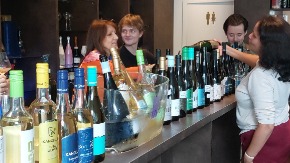
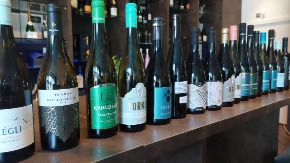
Mint Magazine recently attended the Clerissa wine tasting in association with Glass of Bubbly which hosts specialist courses with approved tutors in the city of London and nationally. On show were
not only a range of whites and reds but some excellent sparkling wines in the traditional method, one or two competing with good champagne.
The 30 Gauging Square Champagne bar is an aladdin’s cave of grand marques and lesser known champagnes and unique wines that one
cannot easily find elsewhere.
Whilst the whites are most popular and well known, we tried three excellent contenders for champagne. Keknyelu Pezsgo from Dobosi at
10.5% abv, Legli Brut 2019 and the award winning Fehervar Borbirtok Grand Reserve extra brut, 2019 at 12% produced by Methode Traditionelle.
The wines offered for tasting by some of London’s top sommeliers were all from the Balaton wine region comprising some 32,000 hectares
with Hungary, one of the seven larger regions itself housing 6 specialist growing areas, Balaton is lush and verdant with its steeped
hills circling Lake Balaton. Originally one single region back the 19th Century, wine growing in the area actually dates back to the
Roman era.
Lake Balaton has some of the coolest hotels in the world and the most stunning scenery so is a fantastic option for a Summer 2027 holiday plan. Before you go however, make sure you educate yourself by joining some of the courses on offer from Glass of Bubbly here, Click here for more information.
Binghatti Flagship Store Art Exbibition.
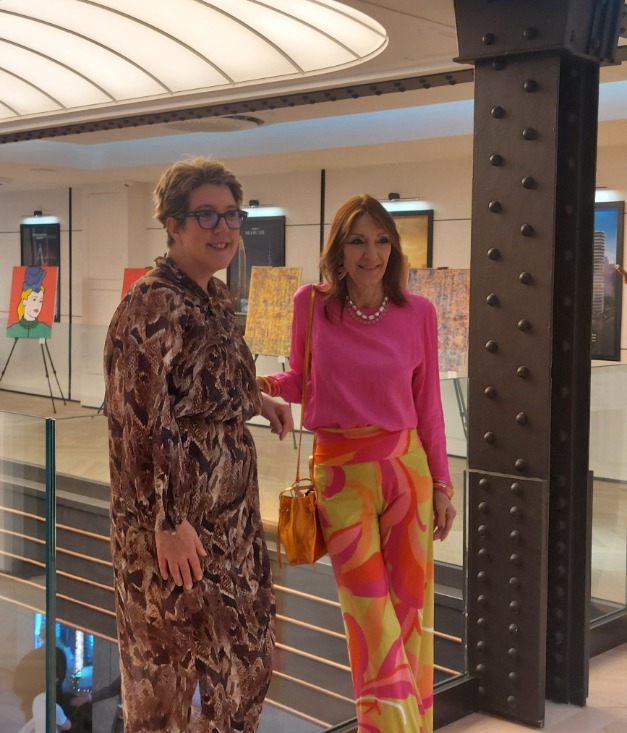
On 3 September 2026, Pandora Mather-Lees, Contemporary Art Editor, was invited to attend an exclusive one night contemporary art exhibition hosted by Chrissy Moore Art Advisory (CMAA), in collaboration with Binghatti and Belli International Real Estate. Held at Binghatti’s London headquarters at 201 Brompton Road, Knightsbridge, the evening brought together contemporary art, architecture and an invited audience within an elegant property setting.
The exhibition presented the work of 17 artists across a range of disciplines, including painting, sculpture and digital media.
(Photo: Chrissy Moore & Pandora Mather-Lees)
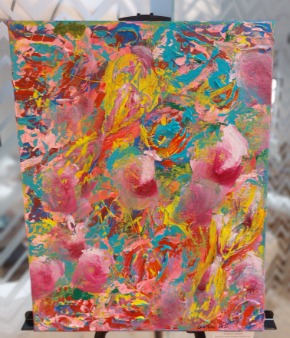
Wonderland Acrylic, on Canvas by Caroline Boff.
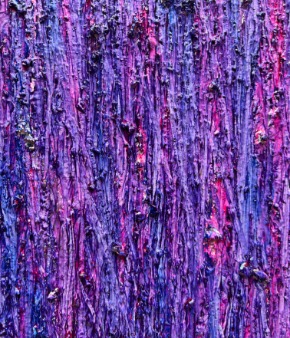
Astra Night, Oil on Canvas by Lara Julian.
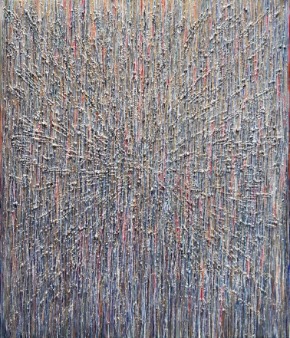
Unfolding Expansion, Oil on Canvas by Lara Julian
The diversity of mediums offered an engaging exploration of how contemporary art can respond to and transform the spaces in which it is displayed. Rather than presenting the works within a traditional gallery environment, the exhibition encouraged visitors to consider the dialogue between artwork, architecture and the experience of the viewer.
CMAA founder and director Chrissy Moore described the concept in terms of “creating genuine connections between art, architecture, and people”. This was particularly evident throughout the evening, where the artworks were experienced both physically and digitally alongside the sophisticated architectural environment of Binghatti’s Knightsbridge headquarters.
The exhibition featured physical works by UK based and international artists, including Caroline Boff, Emma Coyle, Aro and Lara Julian, alongside digital works that extended the presentation into new forms of contemporary practice.
Established in Edinburgh in 2005, Chrissy Moore Art Advisory is a woman led advisory firm supporting both emerging and established artists through curated opportunities and international connections. Its work also extends to collectors, helping them build meaningful collections for personal enjoyment or investment, with an emphasis on transparency and due diligence.
For me, the evening provided a reminder of the fluid and symbiotic relationship between contemporary art, luxury property and the built environment. It demonstrated how carefully curated art can change the atmosphere and perception of a space while creating opportunities for artists to reach new audiences. It was a pleasure to attend and to see CMAA continuing to champion contemporary practice within an international and sophisticated setting.
Sonja Winner Art Gallery at the York Rise Summer Festival.
Pandora Mather-Lees, contemporary art editor of Mint Magazine, spent a fun Saturday at London's Sonja Winner Gallery exhibition forming part of the York Rise Street Party. Winner's chromatic and playful interior show crystallised the feelings of joy and vibrancy of this Annual summer neighbourhood festival.
The gallery featured Sonja Winner’s stunning geometric floor textiles, including debuting the 'Solar Chroma' rug, which shows a clear nod to the conceptual language of the Bauhaus era. The variously shaped carpets with visually dynamic compositions provided an architectural counterpoint to the high calibre of painting and sculpture displayed around them.
(Photo: Pandora Mather-Lees & Lauren Super, with her sculputre & designer trays with Sonja Wiiner.
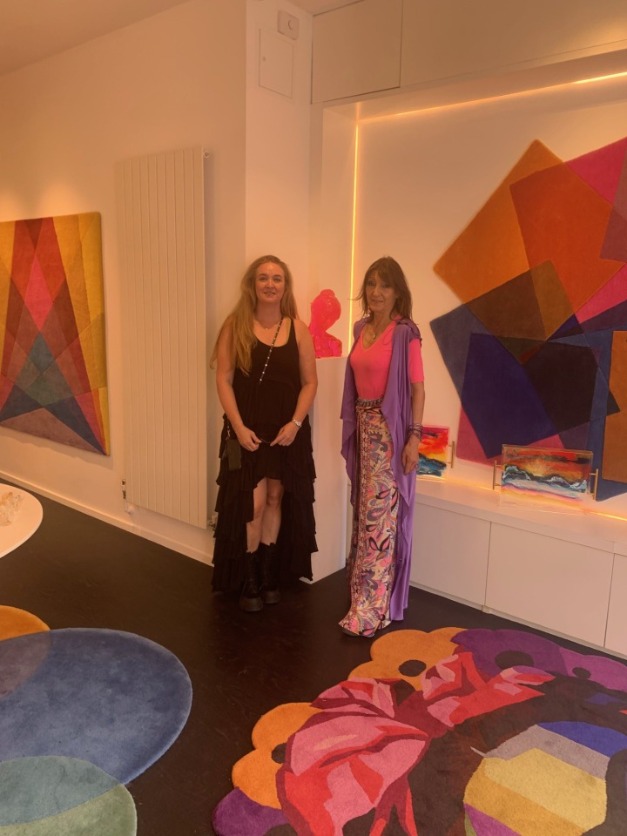
Among those represented was local artist Lauren Super whose glowing landscape canvases, marine fish sculptures (a symbolic series exploring wider social issues) and designer hand-painted resin trays introduced a strong sense of contemplation and spiritual energy to the space. Two of Super’s paintings stood out in particular: "Sunset", and "Bliss" large imposing canvases, with strata of gold white and blue. A signature piece, 'Pixme Glamour' pictured here, is a traditional style bust made contemporary by the media, a saturated neon-pink resin with a scintillating reflective lustre.
Also on show, Philip Low, a New York based artist again, exploring Bauhaus principles, through an assemblage of handcrafted acrylic cubes evoking light, transparency and form through a sensitive colour palette. Also beautifully displayed were organic glass sculptures by Tim Rawlinson featuring iridescent surfaces that captured the natural light within the gallery.
'Sonja' Gallery is a tribute to contemporary living. A curator as well as designer the artist, choreographed a 'gesamptkunstwerk' meaning that the entire gallery emerged as a 'total work of art'. Winner's orchestration of geometric and organic forms with works that explored colour through very different materials and functional objects was an experience. Ultimately the exhibition demonstrated the versatility of contemporary approaches to luminosity and form encouraging us to think again how these elements can shape the spaces we inhabit.
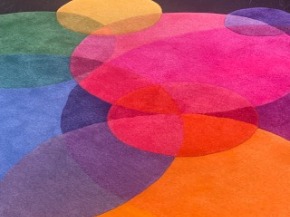
Chorma Rug by Sonja Winner.
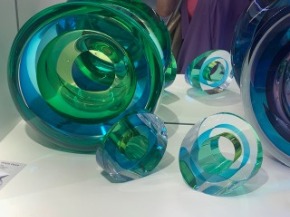
Sculptures by Tim Rawlinson.
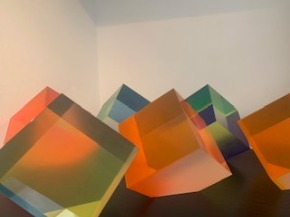
Cube Sculptures by Philip Low.
Artverse Exhibition, London, September 2026.
At the end of last week, Mint magazine visited ARTVERSE at Gallery 54 in Mayfair, where artists Dan Llywelyn Hall and Rory Hutton came together to produce an exhibition which explored the enduring relationship between visual art and British and Irish poetry. This included works by John Keats, W.B. Yeats and Dante Gabriel Rossetti, among others.
Bringing together two distinct artistic practices, the exhibition offered a thoughtful and visually engaging interpretation of literary works, translating the rhythm, atmosphere and imagery of poetry into paintings and drawings. Going beyond mere illustration and analysis of the poetry, Hall and Hutton displayed an instinctive response to the poems, as words became a starting point for explorations of colour, character, memory and place.
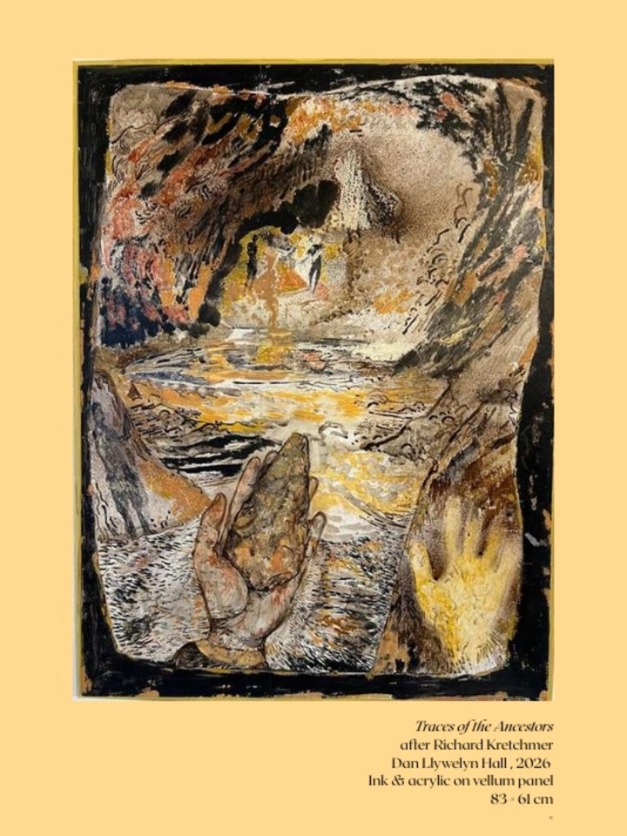
Dan Llywelyn Hall’s work brought a particularly expressive quality to the exhibition, with his painterly approach creating a distinct dialogue between the written word and the canvas. His pieces invited the viewer to consider well-known poetry from a different perspective, departing from the fixed interpretation and replacing it with something more personal and immediate.
Alongside Hall’s paintings, Rory Hutton’s work showcased a fascination with theatricality, costume and historical character. His background in costume design was evident in the attention to detail and sense of narrative within his pieces, creating an intriguing visually expressed bridge between literature and performance. Together, the artists intriguingly created a conversation which transcended traditional distinctions between fine art, fashion and storytelling.
What made ARTVERSE particularly compelling was its accessibility. Even for those encountering the poems in a new context, the works stand confidently on their own, offering compelling visual narratives without requiring an extensive knowledge of the literary sources.
Set within the intimate surroundings of Gallery 54 on Shepherd Market, the exhibition felt appropriately close and conversational. I hugely enjoyed the opportunity to slow down, look closely and reconsider the poetry that has shaped British and Irish culture through an entirely visual lens.


